logo

Wrinkles – A Comprehensive Look at the Signs of Time

Wrinkles

Wrinkles are fine or deep lines and depressions that appear on the surface of the skin. They are among the most prominent and natural signs of the aging process. While they are an inseparable part of life and tell the story of a woman or a man, many seek to understand how they form, what factors accelerate their appearance, and how they can be treated or minimized.

What Exactly Are Wrinkles?

Wrinkles are the result of structural changes that occur in the layers of the skin over time. The skin consists of three main layers – the epidermis (outer layer), the dermis (middle layer), and the hypodermis (subcutaneous layer). Over the years, several critical changes occur in the dermis:

Decrease in Collagen and Elastin Production– Collagen is the protein that gives the skin its structure and firmness, while elastin gives it flexibility and the ability to return to its original shape after stretching. The natural aging process, as well as exposure to environmental factors, slows their production and leads to their breakdown. As a result, the skin loses its vitality, becomes loose, and develops fine lines and wrinkles.
Decrease in Hyaluronic Acid– This molecule is responsible for maintaining the skin’s moisture. Less hyaluronic acid means drier skin, which tends to wrinkle more easily.
Reduction in Subcutaneous Fat Tissue– The hypodermis, which contains fat, thins out, leading to sagging and the deepening of wrinkles.

There Are Two Main Types Of Wrinkles

Dynamic wrinkles (expression lines)– These are wrinkles that appear as a result of repeated and continuous contractions of the facial muscles (smiling, frowning, squinting). They initially appear only during facial expressions, but over time, the skin’s elasticity decreases, they become static wrinkles.
Static wrinkles– These are wrinkles that are visible all the time, even when the face is at rest. They result from cumulative damage, loss of collagen and elastin, and the effect of gravity.

Main Causes Of Wrinkle Formation

1. Sun exposure

This is the number one cause of premature skin aging and wrinkle formation. UV radiation (both UVA and UVB) penetrates the skin and damages the connective tissues—especially collagen and elastin fibers. It accelerates their breakdown and disrupts new production, causing the skin to lose its elasticity and develop deep wrinkles.

2. Smoking

Cigarette smoke contains many free radicals that damage skin cells, accelerate the breakdown of collagen and elastin, and reduce blood flow to the skin. Reduced blood flow means less oxygen and fewer essential nutrients reach the skin, leading to a dull and wrinkled appearance. In addition, the repeated motion of lip contraction while smoking creates fine lines around the mouth.

3. Repeated facial movements (expressions)

As mentioned, repeated contractions of the facial muscles—such as smiling or squinting—create dynamic wrinkles that, over time, become permanent:

  • Horizontal forehead lines
  • Frown lines between the eyebrows
  • Fine lines around the eyes

4. Poor nutrition and dehydration

A diet high in processed sugars and fried foods can lead to a process called glycation, in which sugars bind to collagen and elastin fibers, making them stiff and fragile. Dehydration can accentuate existing wrinkles, but the effect of drinking water on wrinkles is limited. The skin depends more on external hydration (such as moisturizers) and hyaluronic acid to maintain a full and smooth appearance.

Common Areas Of Wrinkle Appearance On The Body

Wrinkles appear in areas where the skin is thinner, less elastic, or more exposed to movement and sunlight.

Face
  • Around the eyes – The skin is especially thin and contains few oil glands.
  • Forehead and between the eyebrows – Caused mainly by facial expressions.
  • Around the mouth – Affected by mouth movement and loss of volume.
Neck and décolletage (chest area)Areas with thin skin that tend to sag and wrinkle due to sun exposure and frequent neglect.
HandsConstantly exposed to sun, water, and cleaning agents, which accelerates fat loss and causes wrinkles and sunspots.

Wrinkles In Men – Is There A Difference?

The formation of wrinkles is equally relevant for men, but there are biological differences that affect their aging process:

Higher collagen densityGenerally, male skin contains a higher collagen density (on average about 20–25% more, according to studies) than female skin. This makes men’s skin thicker and gives them an initial advantage.
Later but stronger agingMen tend to develop wrinkles at a later age than women. However, when wrinkles do appear in men, they are often deeper and form more pronounced and stronger lines, due to thicker skin and stronger facial muscle activity.
Different areas of wrinkle formationWhile wrinkles around the eyes and forehead are common in both sexes, men may develop more fine lines and wrinkles in the lower cheeks and neck area, due to different facial structure and the shaving process.

Common Wrinkle Treatments

Injectable treatments

Botox (Botulinum Toxin)– The most common treatment for dynamic wrinkles. The substance is injected into the muscle and temporarily blocks its ability to contract, smoothing wrinkles on the forehead, between the eyebrows (“frown lines”), and around the eyes (“crow’s feet”).
Dermal fillers– Used to fill deep static wrinkles, restore lost volume in the cheeks and around the mouth, or enhance the jawline. Hyaluronic acid is the most common filler, lasting between 6 and 18 months.

Cosmetic and aesthetic treatments

Chemical peeling– Uses acidic solutions (such as alpha hydroxy acids - AHA, or trichloroacetic acid - TCA) to remove damaged upper skin layers. This process stimulates cell renewal and new collagen production. Note: Chemical peels can cause temporary redness, irritation, or peeling and should be performed under expert supervision.
Laser and IPL treatments– Use focused light or heat to precisely target the dermis layer, triggering a controlled healing process that boosts collagen renewal, smooths wrinkles, and improves skin texture.
Microneedling– Involves a device with tiny needles creating micro-channels in the skin, accelerating collagen and elastin production through natural healing.
Radiofrequency (RF) therapy– Uses radio wave energy to heat the dermis, stimulate collagen production, and tighten the skin. Effective for fine wrinkles and improving texture on the neck and face.
PRP (Platelet-Rich Plasma)– Also known as the “vampire facial,” this treatment injects plasma derived from the patient’s own blood, rich in growth factors, to rejuvenate the skin and improve the appearance of wrinkles.
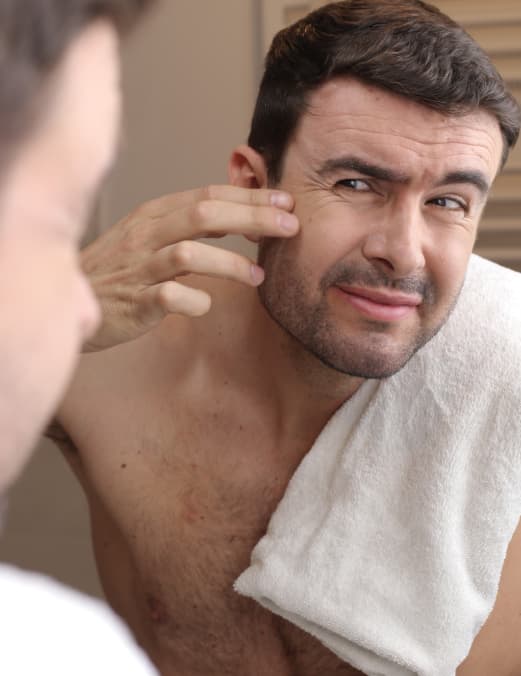
A man looking at his skin in a mirror, possibly after a treatment or examining wrinkles

At-home cosmetic treatments (preventive and restorative)

Antioxidants (Anti-oxidants)– Serums containing Vitamin C and Vitamin E protect the skin from free radical damage (pollution, sunlight) and support collagen production.
Moisturizer and Hyaluronic Acid– Essential for maintaining skin hydration, temporarily plumping fine lines, and improving overall smoothness.

Prescription treatments

Retinoids (Vitamin A derivatives)– Stimulate cell renewal and promote collagen production.
Medicinal creams– Formulated to expand small blood vessels, enhance circulation, and improve skin function, elasticity, and reduce dryness or wrinkles. These are compounded in pharmacies by prescription from a doctor.

At SKCURE, we offer advanced tele-aesthetic wrinkle treatments tailored to each individual, based on precise local therapy following AI diagnosis and a questionnaire. The personalized solution is then discreetly delivered directly to your home.

Recommendations For Minimizing The Chance Of Wrinkle Formation

By adopting a mindful lifestyle and a consistent skincare routine, it’s possible to significantly delay and reduce the appearance of wrinkles.

Daily and uncompromising sun protectionThis is the most important step. Use a broad-spectrum sunscreen (against UVA and UVB) with SPF 30 or higher, every day, throughout the year, even on cloudy days. Apply a generous amount and reapply every two hours during prolonged exposure.
Quit smokingCompletely quitting smoking is one of the most positive things you can do for your skin’s health.
Use retinoidsIncorporate retinol (or another derivative) into your nightly skincare routine. These substances are the gold standard of anti-aging care, but start gradually and always use sunscreen during the day, as they make the skin more sensitive to sunlight.
Diet rich in antioxidantsConsuming a balanced diet rich in fruits, vegetables, healthy fats (such as omega-3), and whole grains supports skin health and protects against inflammation.
Maintain moisture and proper hydrationDrinking plenty of water contributes to overall body health and slightly affects the appearance of wrinkles, though to a limited extent.
Proper sleepMake sure to get 7–9 hours of quality sleep.

The Path To Smooth And Youthful Skin Begins With SKCURE

The fight against the signs of aging is a process that requires a thorough and professional approach. Understanding that it is influenced by various factors, from sun damage to internal changes, is the first step in finding the most effective and precise solution for you.

At SKCURE, we are committed to guiding all patients on their personal journey to reduce wrinkles and firm the skin, by building a comprehensive treatment plan that combines AI-based diagnosis and a questionnaire leading to a highly personalized solution. As a result, you can avoid using multiple products or treatments and receive instead a concentrated solution in a single product – all delivered discreetly and quickly to your home.

Author Image

Authored By - Dr. Shlomo Sadoun

A pioneering pharma entrepreneur with over two decades of experience in the health and biotechnology sectors. Operating at the intersection of science, innovation, and a global vision, leading the development of advanced medical solutions with a real impact on patients’ lives.

Wrinkles – A Comprehensive Guide to the Signs of Time – SKCURE